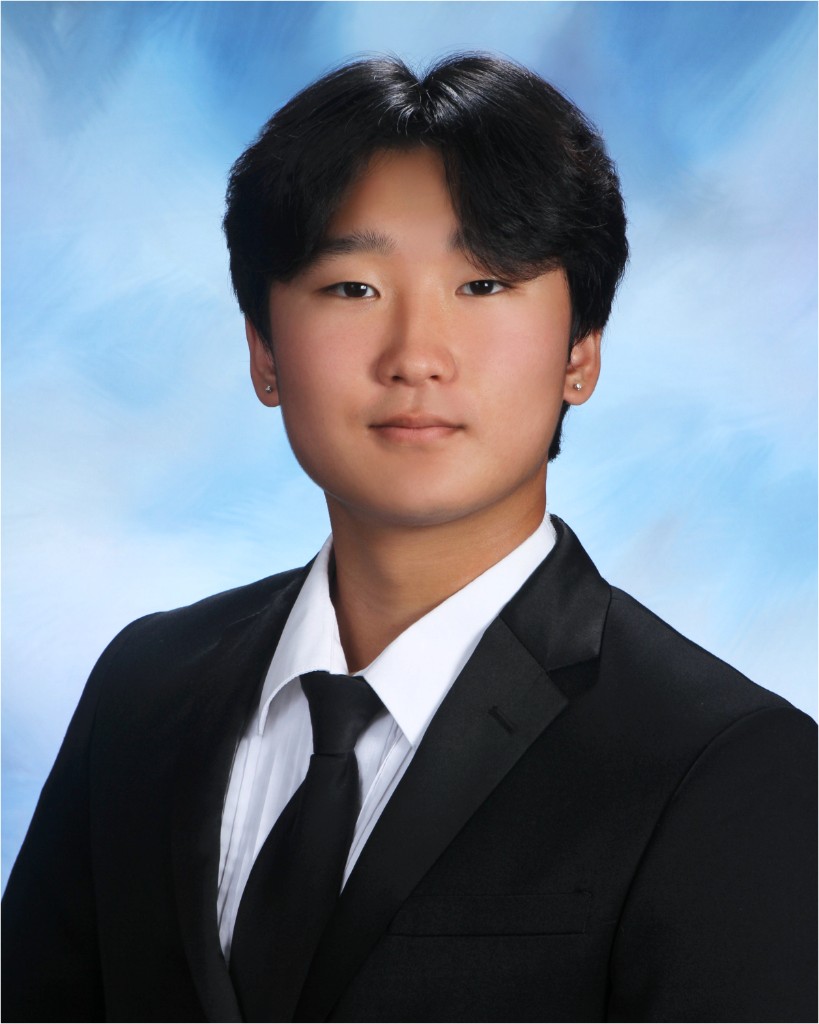
I'm a Computer Engineering student at the University of Illinois Urbana-Champaign, graduating in December 2026. I've written a Unix-like kernel in C and RISC-V assembly, wired a camera to an HDMI display in SystemVerilog, built a Transformer from scratch in PyTorch, and shipped React and FastAPI apps on top of all of it. I've spent the last three summers interning as a software engineer. Right now I'm writing firmware for a vision-guided camera gimbal and working on mixture-of-experts serving across mismatched GPUs.
Looking for new-grad software engineering roles in Chicago, NYC, and the Bay Area.
Contact
I'm looking for new-grad software engineering roles starting after December 2026, and I'm always happy to talk about kernels, models, or anything in between.
About
The through-line in what I build is wanting to know how the layer underneath actually works — which is usually how I end up building it myself. That's how I got to writing a kernel instead of reading about one, and to implementing multi-head attention and a tokenizer by hand instead of importing nn.Transformer.
At UIUC I'm doing a B.S. in Computer Engineering with a minor in Statistics, with coursework in operating systems, distributed systems, algorithms, machine learning systems, deep learning for computer vision, and databases. I competed in USACO Gold Division and hold the Holonyak Scholarship.
Experience
Merkaloop Software Engineering Intern · Jun 2026 – Present
- Built a rules-based TypeScript pricing engine that values used lab equipment from retail anchors, depreciation curves, and condition modifiers, returning price ranges with confidence scores.
- Tracked down a currency-conversion bug that was silently dropping every EUR-priced listing, and added versioned, append-only tables so each valuation is reproducible.
- Fixed a Stripe checkout race that could sell one unit to two buyers, replacing a read-then-write with an atomic PostgreSQL update.
- Built an LLM agent that searches the live web for comparable competitor listings, covering 89% of the catalog.
Printech Workshop Software Engineering Intern · Apr – Jun 2026
- Built a full-stack ERP in FastAPI and Node.js, pulling the Wix and Discord APIs together to unify order, inventory, and production data for 250+ products and save about 10 hours a week of manual work.
- Designed a demand forecasting model that sets the production queue by projected demand, cutting top-seller stockouts from 25 a month to 2.
- Wrote a scheduler that groups print jobs by machine settings, dropping press recalibrations from 9 per shift to 3 and recovering 80 minutes a day.
US Navy Software Engineering Intern (Contract) · May – Aug 2024
- Built a Python and PostgreSQL system automating support-equipment tracking for VH-92 helicopter operations, eliminating 80% of manual data entry.
- Containerized ETL pipelines with Docker and set up CI/CD for automated build, test, and deploy, halving release time.
Work
- In progress Vision-Guided Camera Gimbal — Firmware and vision for a two-axis gimbal that tracks a soccer ball on its own, with an STM32 closing the loop on two brushless motors. Senior design.
- In progress Persistence-Aware MoE Serving — Putting an idle second GPU to work on mixture-of-experts inference by replicating hot experts onto it — but only when demand looks likely to last. ML systems coursework.
- Operating System Kernel — I wrote a Unix-like kernel from scratch in C and RISC-V assembly. It boots to an interactive shell and runs unmodified 1970s BSD games in user mode.
- AlignAI — A real-time exercise form coach. I built the pose-comparison engine that scores your workout against a reference video.
- FPGA Video Pipeline — A camera-to-HDMI display pipeline in SystemVerilog, with a hardware text-overlay engine driven over AXI4-Lite. ECE 385 final project.
- Duplicate-Question Detection — I built a Transformer from scratch — my own multi-head attention and tokenizer — and benchmarked it against a CNN.
- Airbnb Finder — Describe the stay you want in plain English and get ranked listings back, using sentence embeddings instead of filters.
- Stock AI Simulator — A C++ backtesting harness that treats a portfolio as a graph and builds it with Dijkstra, spanning trees, and centrality.
- Course Load Planner — A course-planning and degree-progress app for UIUC students, in React and TypeScript.
Vision-Guided Camera Gimbal In progress
A two-axis gimbal that finds a soccer ball and keeps it centered without anyone driving it — my senior design project (ECE 445) at UIUC. A camera on the gimbal streams frames to a laptop, an object-detection model locates the ball, and the resulting movement commands go over Ethernet to a custom PCB that closes the loop on two brushless motors, with a laser kept on the ball as the visible proof it's tracking.
I work on the firmware and part of the vision. The firmware is an STM32 running the board's state machine: commanding the motor driver over PWM, handling the link back to the laptop, and persisting motor position and calibration to a non-volatile memory IC so the gimbal doesn't lose its bearings across power cycles. On the vision side, detecting the ball and turning its position in frame into the movement commands the board acts on.
It runs on a custom 24 V board that feeds an inverter stage for the motors and steps down to 5 V and then 3.3 V for the logic, with a PI filter sized against the inverter's 25 kHz switching to keep that noise off the rail the analog signals reference. We're building to three targets: hold the ball inside the center 80% of the frame for 30 seconds, update position at least 5 times a second, and re-center within 1 second of the ball re-entering frame.
Persistence-Aware MoE Serving In progress
Mixture-of-experts models route each token to a few experts, and that routing is lopsided: in OLMoE, a small handful of experts absorb a disproportionate share of the tokens, so one GPU queues up while others idle. The usual fix is replicating hot experts, but a replica you create for a hotspot that evaporates has cost you transfer time and memory for nothing.
So we measured whether the imbalance actually persists. Routing patterns within a single workload have about 0.96 cosine similarity, against roughly 0.67 across different workloads — the hotspots are recurring structure, not noise. The system we're building splits the decision in two: a slow path that creates a replica only when expected benefit over a persistence horizon beats the transfer and memory cost, and a fast path that spreads tokens across whatever replicas exist based on live queueing and profiled execution time. The target is the case where you have one strong GPU and one older one sitting idle — we're evaluating on a 4090 and a 3080 with a trace-replay executor. A CS 498 ML Systems project, with four teammates.
Operating System Kernel
I wrote a Unix-like kernel from scratch in C and RISC-V assembly. It does preemptive multitasking, Sv39 three-level paging with a separate address space per process, and a read-write filesystem (KTFS) with a write-back cache. On top of that sit fork, exec, and wait, and a shell of my own that handles I/O redirection, piping, and background jobs.
VirtIO block and UART drivers plus an ELF loader bring it up under QEMU: it boots from nothing, mounts a filesystem off an emulated disk, loads a binary into a fresh address space, and drops into user mode. The games it runs are unmodified 1970s BSD and Infocom programs compiled for RISC-V — the kernel underneath is the project. Recordings of it booting · Source
AlignAI
A real-time exercise form coach, built with a team of three at HackIllinois. I wrote the pose-comparison engine in Python: it aligns your workout against a reference video with dynamic time warping over normalized joint angles, so the score survives you moving at a different speed than the reference. It runs as a REST API on Modal.
I also set up the testing stack for the React and TypeScript frontend — Vitest for units, Playwright end-to-end — and cut search latency with a prefix-aware LRU cache in front of a third-party exercise API, with client-side debouncing that cancels stale requests. Try the demo · Source